Many people I know assume that a vote for Brexit is simply a yearning to return to "little England" and the days of the British Empire, with David Cameron saying that Brexiters "Want to take us backwards."
The Leave Campaign has been called "borderline racist" and I confess, some of the language involved has made me a bit twitchy; phrases like "Let's take back control of our borders" do smack of old-fashioned jingoism.
The blatant bigotry of the kind of people who hold up signs saying "foreigners go home" is one thing. But prejudice comes in many forms, and I can't help being cynical about the patting-ourselves-on-the-back-for-being-so-generous smugness that is so prevalent in social media and TV audiences.
The Leave Campaign has been called "borderline racist" and I confess, some of the language involved has made me a bit twitchy; phrases like "Let's take back control of our borders" do smack of old-fashioned jingoism.
The blatant bigotry of the kind of people who hold up signs saying "foreigners go home" is one thing. But prejudice comes in many forms, and I can't help being cynical about the patting-ourselves-on-the-back-for-being-so-generous smugness that is so prevalent in social media and TV audiences.
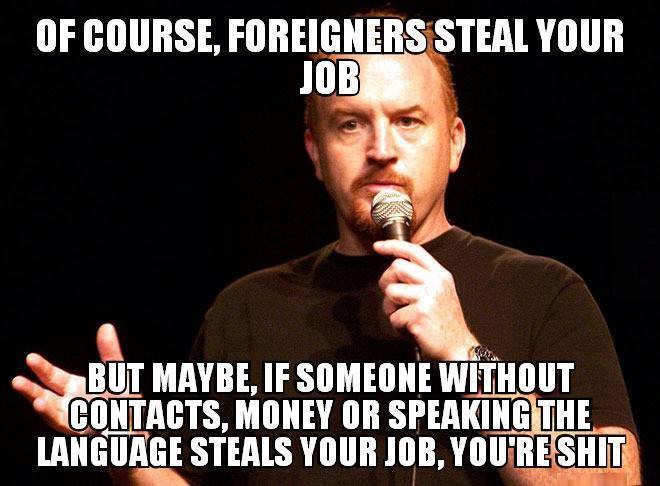
Every time someone in a debate says that immigration is great (for us) because "they do the jobs YOU don't want to do", it makes me cringe a little bit. Don't people HEAR how that sounds? As if we've finally found an acceptable way to go back to the old colonial days, except this time we don't even have to set sail for foreign shores – we can get our toilet scrubbed and our nails done and our fast food served to us by cheap labour and then tell our friends how wonderfully hard-working they are. Aren't we just soooo open-minded and benevolent? Especially when we count up how much money we've saved by employing a Slovenian au pair via Gumtree rather than getting a lazy British teenager through an agency.
Sometimes the milk of human kindness curdles; Angela Merkel's irresponsible offer of a warm welcome to helpless refugees encouraged them to risk their lives trying to get to Germany. We're often so keen to appear welcoming and racially sensitive that we live in denial, because that way we don't have to actually give a toss about the quality of life for our immigrants. Like dismissing reports of Romanians living ten-to-a-bedroom as a "nasty stereotype", instead of admiring them for putting aside their own short-term discomfort in order to share rent and give themselves a financial leg-up.
Sometimes the milk of human kindness curdles; Angela Merkel's irresponsible offer of a warm welcome to helpless refugees encouraged them to risk their lives trying to get to Germany. We're often so keen to appear welcoming and racially sensitive that we live in denial, because that way we don't have to actually give a toss about the quality of life for our immigrants. Like dismissing reports of Romanians living ten-to-a-bedroom as a "nasty stereotype", instead of admiring them for putting aside their own short-term discomfort in order to share rent and give themselves a financial leg-up.
 |
| It can get a bit crowded. |
"Everyone voting for Brexit is xenophobic" is as much of a media-created narrative as the "immigrants steal our jobs" story. (It's a little ironic to assume you know why someone is voting a certain way, then call them "prejudiced".) But sometimes the most ardent supporters of immigration inadvertently reveal their own doubts about it.
Suppose your friend says to you: "I've put on so much weight! I'm going to have to buy some bigger clothes." If you thought that being fat was neither a negative or a positive, but simply took your friend's words as a neutral statement of fact, you might answer "Well, let's go shopping! M & S are having a sale." If, however, you saw being fat as a VERY BAD THING, you'd deny it. "Of course you're not fat! You look exactly the same as you always have! You're VERY SLIM."
Suppose your friend says to you: "I've put on so much weight! I'm going to have to buy some bigger clothes." If you thought that being fat was neither a negative or a positive, but simply took your friend's words as a neutral statement of fact, you might answer "Well, let's go shopping! M & S are having a sale." If, however, you saw being fat as a VERY BAD THING, you'd deny it. "Of course you're not fat! You look exactly the same as you always have! You're VERY SLIM."
This is basically the way that some Remainers react to anyone who says that a) we have quite a few immigrants, and b) maybe having more people in the country means that we'll need to build more houses, schools, hospitals etc. (Not forgetting the sewers! "It's no good building more houses if there's nowhere for the poo to go," as a plumber once told me.)
Why on earth don't they just say "Yes, that's true." There's nothing WRONG with having immigrants! When we say that "old people living for longer" puts a strain on services, we just accept it as a fact of life. It's not necessarily rife with implicit aggression aimed at pensioners, and we don't try to shut down people saying it by shrieking "How dare you say such a thing about dear sweet elderly people! You old-age hater!"
But when we deny that net migration of 336,000 people in a single year might have any impact whatsoever on a country's infrastructure, we lose credibility. If we insist that our housing shortage is purely down to rich people buying up London property and then leaving it empty, or that the 6-week wait to see your GP is just down to funding cuts, it sounds as if we think that immigration is somehow shameful and must never be discussed. The reality is that OF COURSE we're going to need more facilities now that we have more people – it's the price we pay for having a growing economy and extra help running essential services like the NHS. If pro-EU politicians had acknowledged this instead of acting as if it's a crazy, bigoted fallacy, maybe people wouldn't have become frustrated enough to force a referendum.
The attitude to immigrants / likelihood of voting for UKIP is often seen as a class issue, with the middle-class intellectuals scoffing at the views of those poor ignorant chavs, with their England flag tattoos and cans of lager. It's a fair point, but if we put aside our snobbery and try empathy instead, we might get more of an insight into why some people are so ferociously in favour of limits on immigration. After all, It's easy to be generous towards migrants when you're skipping to your job at the BBC, The Guardian under your arm as you pop into Starbucks for your morning skinny latte and plan your next big holiday: your life is only ever going to be improved by free movement. On the other hand, if you work as a builder or a cleaner, the joke could come true; you might actually lose work to a newcomer who can undercut your prices.
Similarly, you might embrace an amnesty for illegal immigrants because it sounds so sweet and nice, but it's still a bit of a kick in the teeth to those migrants who have spend considerable time and energy going through the official channels. There is always another side of the story, and knee-jerk reactions (often virtue signalling how non-racist you are) serve no purpose other than clogging up our twitter feeds.
 The shiny-faced students on Question Time say proudly "We should just take down all the borders" but it never seems to occur to them to ask what's happening in the country that person has just left. Or whether a mass exodus of all the most courageous and motivated citizens, leaving in search of better prospects, is going to work out so well for the people left behind.
Lots of people I know are choosing to vote remain largely because they want the option of living abroad in future and love the ease of travel with borderless Europe. But having a summer of backpacking around Italy or fruit-picking for a lark is a very different prospect from reluctantly leaving your home country – and extended family – because there aren't any jobs, and your only chance for a better life is to try somewhere else.
We quietly ignore the fact that many immigrants are actually highly qualified professionals who choose to set aside their expertise and take the first job they can get their hands on. There's nothing wrong with working for minimum wage (I've had some pretty awful jobs in my time, ain't no shame in it) but really? Doctors and lawyers being forced to stack shelves and mop up vomit, just to make ends meet?
The attitude to immigrants / likelihood of voting for UKIP is often seen as a class issue, with the middle-class intellectuals scoffing at the views of those poor ignorant chavs, with their England flag tattoos and cans of lager. It's a fair point, but if we put aside our snobbery and try empathy instead, we might get more of an insight into why some people are so ferociously in favour of limits on immigration. After all, It's easy to be generous towards migrants when you're skipping to your job at the BBC, The Guardian under your arm as you pop into Starbucks for your morning skinny latte and plan your next big holiday: your life is only ever going to be improved by free movement. On the other hand, if you work as a builder or a cleaner, the joke could come true; you might actually lose work to a newcomer who can undercut your prices.
Similarly, you might embrace an amnesty for illegal immigrants because it sounds so sweet and nice, but it's still a bit of a kick in the teeth to those migrants who have spend considerable time and energy going through the official channels. There is always another side of the story, and knee-jerk reactions (often virtue signalling how non-racist you are) serve no purpose other than clogging up our twitter feeds.
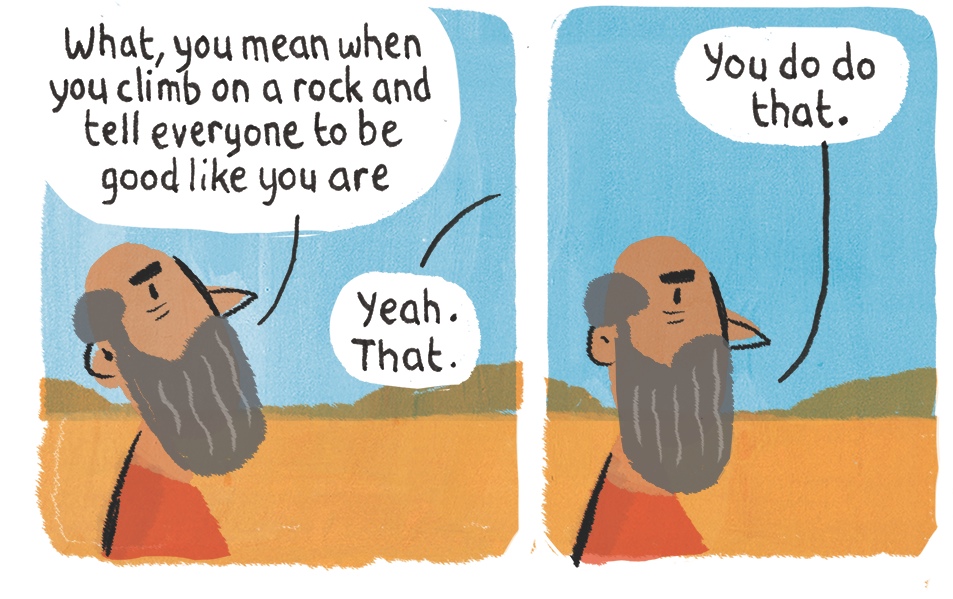
Lots of people I know are choosing to vote remain largely because they want the option of living abroad in future and love the ease of travel with borderless Europe. But having a summer of backpacking around Italy or fruit-picking for a lark is a very different prospect from reluctantly leaving your home country – and extended family – because there aren't any jobs, and your only chance for a better life is to try somewhere else.
We quietly ignore the fact that many immigrants are actually highly qualified professionals who choose to set aside their expertise and take the first job they can get their hands on. There's nothing wrong with working for minimum wage (I've had some pretty awful jobs in my time, ain't no shame in it) but really? Doctors and lawyers being forced to stack shelves and mop up vomit, just to make ends meet?

Is it me, or is this an incredibly crappy way for people to have to spend their lives? Yet we refuse to admit anything might be wrong with the system for fear of being labelled xenophobic. We'd rather keep the status quo than admit there might be something rotten in the state of Brussels and then have to actually do something about fixing it.
It's becoming well-known that giving money to big charities isn't the best way to help: your donation pays for the CEO's £200,000 salary and the marketing budget, which is then sent back to you in the from of "free" calendars and notecards. The actual work they do undermines the people it is meant to help, creating a new cycle of dependency. Books such as "Shut up and Give" (Chad Jordan) and "Toxic Charity: How Churches and Charities Hurt Those They Help (And How to Reverse It)" (Robert D. Lupton) discuss the futility of chucking money at a "charity" without actually seeing effective results.
Britain makes charitable donations in the form of foreign aid; in fact, we're second only to the USA in generosity. But while sending cash to governments even more corrupt than our own might give us an altruistic glow, it doesn't actually do any good.
I'm starting to feel that our patronising attitude to migrants has the same vibe. It's so much easier to just give your money to Oxfam (in exchange for natty "I bought you a goat" cards) and feel instantly pious, than it is to actually think about where the money is going and find more effective alternatives (like micro-financing, for example.) Likewise, it's easier to talk loudly about how great it is to have open borders and scream "Racist!" when people express concern over the sustainability of constant immigration, than to actually look at why people NEED to migrate thousands of miles away from home.
Perhaps we could offer help that would improve countries as a whole; by trading with them, by sponsoring businesses, offering scholarships in local schools, sharing expertise and resources. Perhaps we could help other countries reach their potential instead of bragging about how many of their workers we're taking?
Right now, by buying into the "togetherness" of the EU, we're locking OUT developing countries. For instance, the Common Agricultural Policy, designed to help farmers across Europe, is life-destroyingly bad for farmers in African countries. It keeps prices artificially low, which means those outside of the system can't compete.
The EU also steals resources such as fish from the coast of Gambia (and you thought British fishermen had a legitimate claim to be cross). That warm, fuzzy friendship and co-operation that the Remainers have been so vocal about only applies to those on the inside of the club, and this makes me mad enough to spit.

Right now, by buying into the "togetherness" of the EU, we're locking OUT developing countries. For instance, the Common Agricultural Policy, designed to help farmers across Europe, is life-destroyingly bad for farmers in African countries. It keeps prices artificially low, which means those outside of the system can't compete.
The EU also steals resources such as fish from the coast of Gambia (and you thought British fishermen had a legitimate claim to be cross). That warm, fuzzy friendship and co-operation that the Remainers have been so vocal about only applies to those on the inside of the club, and this makes me mad enough to spit.

The Syrian Refugee crisis is just one of the horrible events which has made me pause to contemplate just how much of a lottery life is. While I enjoy my comfortable existence, blighted only by first world problems such as "I don't know which new laptop to buy", others have had to flee from their bomb-decimated homes in fear for their lives, then move into refugee-camp-limbo for months or even years on end.
The EU reinforces this where-you're-born-determines-your-lot-in-life concept; giving its member states, and ONLY its member states, special privileges such as free movement. What's more fair? Allowing in limitless numbers of people just because they happen to have been born in the "right" country? Or offering a DECENT opportunity to someone from outside of that coveted in-group, because they have proved themselves to be hard-working and go-ahead? When we have free movement between a certain group of lucky countries, it means less room and fewer chances for migrants from elsewhere.
Illustrator Axel Scheffler said that "Without the EU, there would be no Gruffalo". Which is as flimsy a reason to vote "in" as any other. (Maybe not quite as flimsy as the threat of World War Three.) But what if right now, there is an equally fantastic artist living in Japan? Or Bolivia? We might never meet them!
One of the most constant arguments from the Remain side has been that an emancipated UK will be "isolated" and "looking inwards" rather than embracing all that wonderful European-ness. Why must we stop with Europe? Immigrants from all over the world enrich our culture, our economy, our friendship groups and our gene pool.
One of the most constant arguments from the Remain side has been that an emancipated UK will be "isolated" and "looking inwards" rather than embracing all that wonderful European-ness. Why must we stop with Europe? Immigrants from all over the world enrich our culture, our economy, our friendship groups and our gene pool.
But the EU doesn't unify, it divides; as Chris Bickerton, Cambridge university's politics lecturer points out: "The euro has created new divisions but it has also cemented older ones. It has exaggerated the differences between productive and unproductive national economies."
I know what you're thinking: how can we trust that OUR government (regardless of which party is in charge) will do the right thing, when they have so often screwed up in every possible way?
 |
| Let's not forget that it was Labour who came up with this beyond-parody marketing strategy. |
We can't, of course. If we do vote for Brexit, that doesn't automatically mean we'll start creating a fairer world. But it's easier to reform our own system than somebody else's. Outside of the EU, change is possible. Inside, we're stuck forever with what we're given.
For those who are wondering "If we leave the EU, what will happen to all the Brits who have emigrated?" The answer is: nothing. Just like nothing will happen to the Europeans in the UK. They're protected by the Vienna Convention of 1969, which says people will keep the rights that they once exercised under a treaty, even if that treaty is later terminated. Nobody is getting chucked out. NOBODY – not even your pal Nigel – has ever said they're aiming to stop migration altogether, and controlled rather than free movement will continue.
And believe it or not, it's about whether we want to close ourselves off into a special little members-only club with a velvet rope, or if we want to be open to the whole world. On the 24th June, will we have surrendered to keeping everything just the way it's been for 43 years, or will we step out, blinking like a little baby deer, into the bright sunshine of a brave new (whole and unlimited) world?